
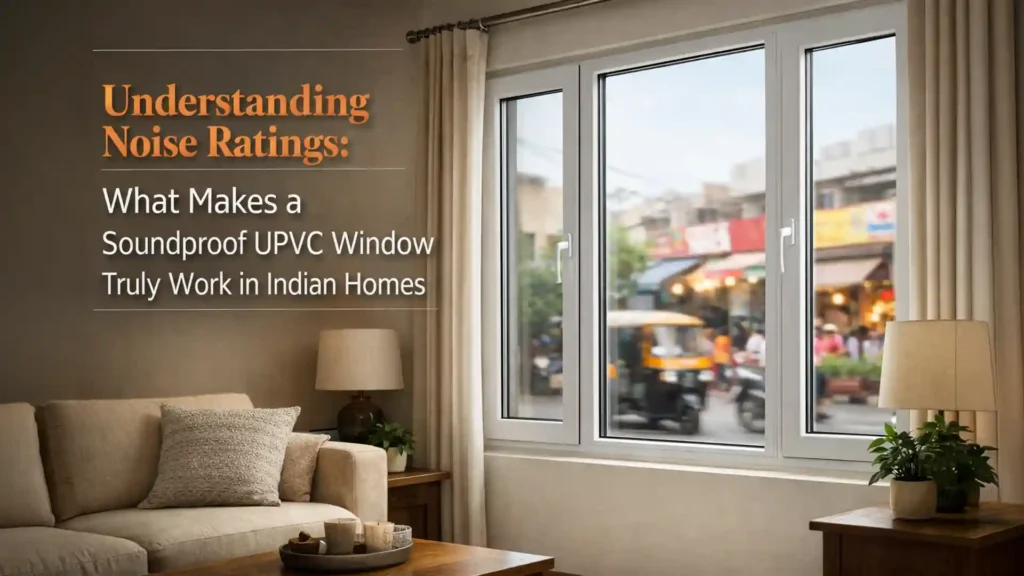
Honking traffic, barking dogs, temple loudspeakers, construction drills—it’s the daily playlist of every urban Indian home. And while many of us invest in good curtains or double walls, the weakest link remains the same: poorly sealed, badly fabricated windows.
That’s why Soundproof uPVC Window Ratings India are becoming a hot topic, especially among homeowners who are sick of the chaos leaking in. But here’s the thing—most people don’t really understand what these ratings mean, or how to tell if a window is truly soundproof or just marketing fluff.
Let’s break it down, builder-style.
What Does “Soundproof” Actually Mean for uPVC Windows?
No window is 100% soundproof. What we’re aiming for is sound reduction—and that depends on multiple factors:
- Glass thickness
- Glazing type (single, double, laminated)
- Window frame material and sealing
- Installation accuracy
- The kind of noise you’re blocking (low-frequency vs high-frequency)
The best uPVC systems in India focus on multi-point sealing, thicker profiles, and acoustic glazing—all of which are evaluated through standardized Soundproof uPVC Window Ratings India.
Meet the Ratings: STC and dB Values Explained
Two terms come up often in soundproof window specs:
- STC (Sound Transmission Class): Common in global specs, especially American systems
- dB Reduction: More directly used in Indian market communication
An STC rating of 25 means “you’ll still hear the outside.” An STC of 35–40 means “you’ll hear it, but barely.” Anything 45+ is considered very good for high-noise areas like near airports, highways, or markets.
When you see Soundproof uPVC Window Ratings India, check if the dB reduction is 30–40 dB for reliable sound control in typical Indian homes.
What Matters More: Glass or Frame?
Short answer: both. But if we’re being real, the glass does a bigger chunk of the work.
- Standard single-pane glass? 20–25 dB reduction.
- Double-glazed with air gap? 30–35 dB.
- Laminated acoustic glass (two panes + PVB layer)? Up to 45 dB with the right setup.
However, even the best glass is useless if your frame leaks. That’s why systems with multi-chambered uPVC profiles, dual gaskets, and pressure-equalizing drainage paths perform better when it comes to Soundproof uPVC Window Ratings India.
Common Myths About Soundproof Windows in India
Let’s bust a few myths real quick:
Myth 1: Any double-glazed window is soundproof.
Not true. If the glass panes are of the same thickness, they cancel similar frequencies—leading to poor performance. Mixed thickness or laminated panes work better.
Myth 2: Thick frames alone block sound.
Nope. Without tight seals and proper installation, sound will sneak through gaps like a thief in the night.
Myth 3: You can “make” a window soundproof by adding film.
Sorry. Films can block UV and heat—but not sound. If you want real change, you need glass and frame synergy.
That’s why certified systems with verified Soundproof uPVC Window Ratings India should be your go-to.
Real-Life India Use Cases: Why Ratings Matter
A window with a 32 dB rating might be perfect for a suburban home in Haldwani. But a high-rise flat in Noida near the expressway? You’ll need a minimum 38–40 dB rating to sleep through the honks.
Here’s where Magwin (for example) stands out—brands like these test their uPVC window systems specifically for Indian noise profiles, from railway horns to festival speakers. They optimize frames for vibration absorption and use hardware that doesn’t rattle under wind pressure.
So next time you read about Soundproof uPVC Window Ratings India, don’t just go by the label—ask about what kind of noise testing has been done.
Installation: The Silent Deal-Breaker
You could buy a 45 dB–rated window, but if the contractor uses foam sealant poorly or doesn’t align the sash properly, congrats—you’ve installed a leaky sound tunnel.
Many builders now work with trained window installation partners who follow site-specific fitting rules:
- Cleaning the reveal surface thoroughly
- Using anchor fasteners instead of just foam
- Sealing inside and out with weather-grade silicone
- Checking gasket compression with real-time decibel meters
That’s when you actually start to feel the benefit of those Soundproof uPVC Window Ratings India.
A Quick Buyer’s Checklist for Choosing Soundproof uPVC Windows
Before investing, make sure you get answers to the following:
✅ What is the dB reduction rating for the full system (not just the glass)?
✅ Is the system tested for Indian climate and noise ranges?
✅ Does the brand offer laminated glass or varied pane thickness options?
✅ Are installers trained for airtight fitting and silicone sealing?
✅ Is the hardware rattle-free and certified for long-term performance?
A brand that ticks these boxes likely understands how Soundproof uPVC Window Ratings India must be achieved, not just claimed.
Final Thought: Peace of Mind Has a Rating—Check It
Sound isn’t just noise—it’s stress. It affects sleep, focus, conversations, and even relationships. You don’t need a recording studio–level setup, but you do need smart choices when it comes to your windows.
So next time someone tells you their uPVC windows are “soundproof,” ask for their Soundproof uPVC Window Ratings India. The number tells the truth—because silence, in an Indian city, is luxury.
Want expert guidance on choosing the right noise-rated windows for your home?
Get in touch with your trusted uPVC window specialist and ask for certified soundproof models that match your environment.