
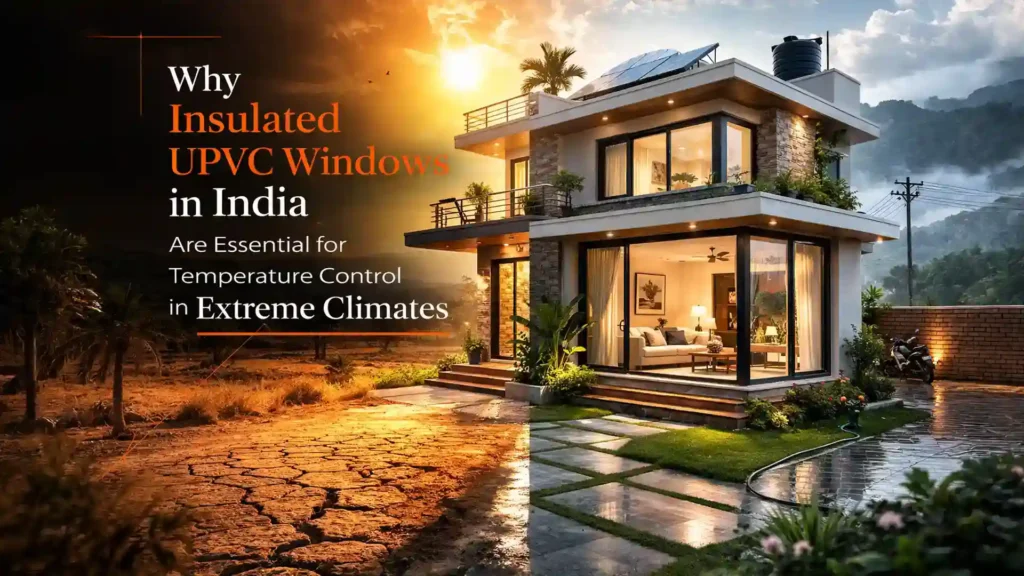
India experiences some of the most diverse and extreme climate conditions in the world. From the scorching summers of North India to the freezing winters in hill regions like Uttarakhand, homes are constantly battling temperature fluctuations. That’s where Insulated uPVC Windows in India have become more than just a premium upgrade — they are a necessity.
In regions like Dehradun, Haldwani, Ranikhet, and beyond, Magwin has observed a clear shift in buyer behaviours. Homeowners are no longer selecting windows only for design appeal. They are prioritizing insulation, energy efficiency, and indoor comfort.
If you are building or renovating in an extreme climate zone, understanding why insulation matters could directly impact your long-term comfort and energy savings.
The Science Behind Heat Transfer in Homes
Before understanding why Insulated uPVC Windowsare essential, it’s important to know how heat enters or escapes a home.
Heat transfer happens through:
- Conduction (through materials like glass and frame)
- Convection (through air leakage gaps)
- Radiation (direct sunlight exposure)
Traditional wooden or aluminum windows often allow higher thermal transfer. Aluminum, in particular, is a good conductor of heat, meaning it transfers outside temperature directly indoors.
Magwin addresses this issue by integrating multi-chambered profiles and double-glazing options that significantly reduce thermal exchange.
When insulation improves, indoor temperatures stabilize — reducing dependence on air conditioners and heaters.
Multi-Chamber Profiles: The Structural Insulation Layer
One major reason Insulated uPVC Windows in India perform better is their multi-chambered profile design.
These chambers:
- Trap air inside the frame
- Act as thermal barriers
- Reduce heat conduction
- Improve structural rigidity
Magwin uses reinforced multi-chambered profiles that enhance both strength and insulation performance. Unlike single-layer frames, multi-chamber systems slow down temperature transfer between interior and exterior environments.
In hot plains, this reduces indoor heat gain. In cold hill stations, it minimizes heat loss.
Double Glazing: A Game-Changer for Thermal Efficiency
Glass plays a major role in temperature control.
Modern Insulated uPVC Windows in India often incorporate double-glazed units (DGU), where two glass panes are separated by an air or gas-filled gap.
Benefits include:
- Reduced heat transmission
- Improved sound insulation
- Lower condensation formation
- Enhanced indoor comfort
Magwin frequently recommends double-glazing for homes in extreme climate zones like Uttarakhand, where summer heat and winter chill both demand efficient insulation.
This system significantly improves energy performance without compromising visibility or design.
Energy Savings and Long-Term Cost Reduction
Extreme temperatures lead to excessive use of air conditioners and heaters. Over time, energy bills rise substantially.
Homes with Insulated uPVC Windows in India experience:
- Reduced HVAC usage
- Stable indoor temperature
- Lower electricity consumption
- Increased energy efficiency
Magwin has seen homeowners report noticeable improvements in comfort levels after upgrading to insulated systems.
While insulation may increase initial cost slightly, the long-term savings often outweigh the investment.
Energy-efficient windows contribute directly to sustainable living.
Comfort Beyond Temperature: Noise and Air Quality
Temperature control is not the only benefit.
Well-designed Insulated uPVC Windowsalso improve:
- Noise reduction
- Airtight sealing
- Dust resistance
- Indoor air quality
In cities like Dehradun or urban corridors across North India, insulated windows prevent hot air infiltration and block dust entry.
Magwin integrates EPDM gaskets and precise sealing to maintain airtight performance.
Comfort is multi-dimensional — temperature, sound, and cleanliness all matter.
Why Aluminum Falls Short in Extreme Conditions
Many homeowners compare uPVC with aluminum. However, aluminum conducts heat rapidly.
In extreme heat:
- Aluminum frames become hot to touch
- Indoor cooling load increases
In winter:
- Aluminum transfers cold inward
- Condensation forms near frames
This is why Insulated uPVC Windows in India outperform standard aluminum systems in temperature management.
Magwin educates clients on material science before they finalize decisions.
Choosing the right material is foundational to long-term comfort.
Structural Stability in Temperature Swings
Temperature fluctuations cause materials to expand and contract. Poorly designed windows may warp or lose alignment.
High-quality Insulated uPVC Windows in India accommodate expansion through:
- Controlled expansion gaps
- Reinforced steel inserts
- Thermal break systems
Magwin ensures that installations follow proper expansion allowances to prevent structural stress.
Stable installation preserves insulation efficiency over time.
Ideal for Hill Regions and Urban Heat Islands
In hill towns like Almora or Mukteshwar:
- Cold nights require heat retention
- Wind exposure demands structural strength
In urban heat islands like Delhi NCR:
- High surface temperatures require heat resistance
- Noise insulation enhances comfort
Homes using Insulated uPVC Windows in India benefit in both environments.
Magwin customizes insulation configurations based on geographic location and building orientation.
Climate-aware design maximizes performance.
Sustainable Construction and Green Goals
Energy efficiency plays a major role in green building certifications.
Using Insulated uPVC Windows in India contributes to:
- Reduced carbon footprint
- Lower operational energy demand
- Improved thermal performance ratings
Magwin collaborates with architects to align window systems with sustainable building objectives.
Environmentally responsible choices begin at the design stage.
Installation Precision Is Equally Important
Insulation only works if installation is precise.
Magwin ensures:
- Accurate levelling
- Airtight foam sealing
- Proper sill alignment
- Drainage channel testing
Improper installation can compromise insulation benefits.
Temperature control depends on both product and process.
Long-Term Durability Under Harsh Conditions
Extreme climates accelerate wear and tear. Poor-quality windows may:
- Discolour under UV exposure
- Lose sealing efficiency
- Develop frame misalignment
Magwin’s insulated systems use UV-stable profiles and corrosion-resistant hardware to maintain durability.
Choosing durable Insulated uPVC Windows in India ensures long-term structural and thermal performance.
Final Thoughts: Invest in Comfort That Lasts
Temperature control in extreme climates is not a luxury — it is essential for health, comfort, and energy efficiency.
Homes across India are increasingly adopting Insulated uPVC Windows in India because they deliver measurable benefits:
- Reduced energy bills
- Improved indoor comfort
- Enhanced structural stability
- Long-term durability
Magwin continues to support homeowners and developers with climate-aware solutions designed for India’s environmental diversity.
If you are planning construction or renovation in an extreme climate zone, prioritize insulation from the start.
📞 Looking for expert guidance on uPVC windows? Contact Magwin at +91 7248-000121