
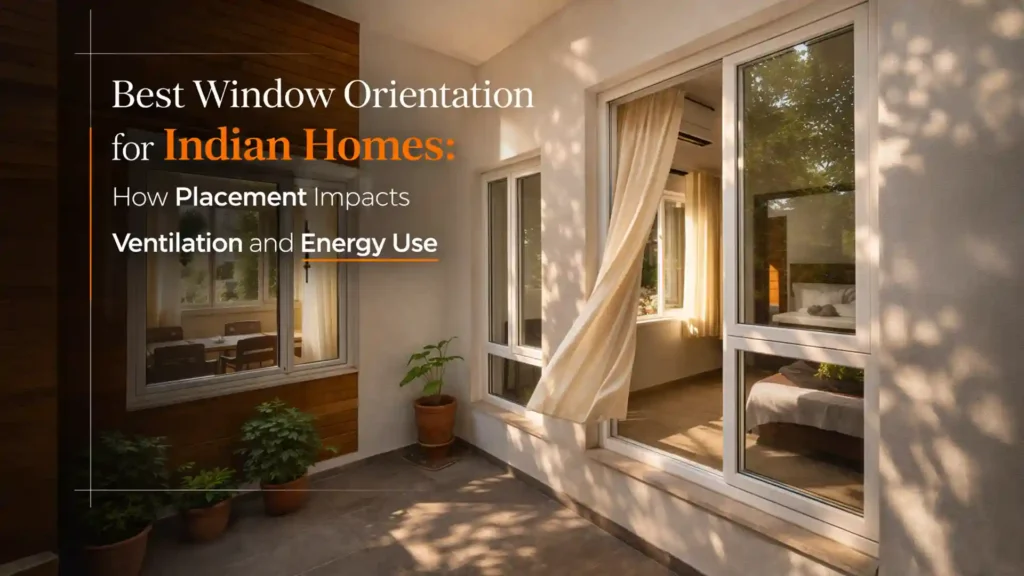
When planning a home, people often focus on layout, flooring, or interior finishes. Windows are usually discussed only after the structure is almost complete. However, architects know that the Best Window Orientation for Indian Homes is one of the most important decisions influencing comfort, ventilation, and energy efficiency.
India’s climate varies widely across regions. Summers can be extremely hot in northern plains, while winters in hill regions like Uttarakhand can be quite cold. The way windows are positioned determines how much sunlight, air circulation, and heat transfer your home experiences.
Magwin frequently works with homeowners and builders who realize too late that poor window placement leads to overheating rooms, weak ventilation, or higher energy consumption. Careful planning during the design stage can prevent these issues and create healthier living environments.
Understanding how orientation works allows homeowners to build spaces that stay comfortable naturally without relying heavily on mechanical cooling.
Understanding Sun Movement and Its Impact on Homes
The sun’s path across the sky changes the intensity and direction of heat entering a building. In India, the sun travels primarily across the southern portion of the sky. This makes south- and west-facing walls receive stronger sunlight during the day.
When designing the Best Window Orientation for Indian Homes, architects consider how sunlight interacts with different rooms throughout the day.
Magwin collaborates with builders to study these patterns before finalizing window placements. Rooms used during daytime hours benefit from natural light, while bedrooms should remain cooler and shielded from excessive afternoon heat.
Balancing daylight and heat control helps maintain indoor comfort.
North-Facing Windows: Consistent Natural Light
North-facing windows are often considered ideal for steady daylight. They receive indirect sunlight throughout the day without intense heat exposure.
Many architects recommend north-facing openings when designing the Best Window Orientation for Indian Homes, particularly for living areas, workspaces, or studios that benefit from even lighting.
Magwin often installs larger window systems on the north side of homes to maximize natural brightness while maintaining thermal comfort. Because these windows avoid direct sun exposure, they help reduce heat gain during summer.
This orientation supports comfortable lighting conditions without increasing cooling requirements.
East-Facing Windows: Gentle Morning Sunlight
East-facing windows receive soft sunlight during early morning hours. This natural light can help warm interiors slightly without creating excessive heat later in the day.
When planning the Best Window Orientation for Indian Homes, east-facing windows are often placed in bedrooms or kitchens where morning light is beneficial.
Magwin designs east-facing window installations with balanced glazing to allow daylight while preventing glare.
Morning sunlight can also help reduce humidity indoors, making spaces feel fresh and ventilated at the start of the day.
Proper placement of east-facing windows enhances both comfort and natural illumination.
West-Facing Windows: Managing Afternoon Heat
West-facing windows are often the most challenging because they receive strong sunlight during the hottest part of the day.
In many homes, poor west-side design leads to overheating interiors. That’s why the Best Window Orientation for Indian Homes requires careful control of west-facing openings.
Magwin often recommends:
- Smaller window sizes
- Double-glazed glass
- External shading elements
These strategies allow homeowners to maintain ventilation without allowing excessive heat to enter.
Managing western exposure effectively can significantly improve energy efficiency.
South-Facing Windows: Controlled Daylight and Warmth
South-facing windows receive sunlight for most of the day, particularly during winter months. In colder regions such as Uttarakhand, this orientation can help warm interiors naturally.
Designing the Best Window Orientation for Indian Homes often involves balancing south-side sunlight with shading solutions.
Magwin works with architects to integrate shading devices or balcony projections that control heat gain during summer while still allowing winter sunlight to enter.
This approach creates seasonal balance — warmth when needed and cooling when temperatures rise.
Cross Ventilation and Airflow Efficiency
Ventilation is just as important as sunlight. Proper window orientation helps create natural airflow patterns within the home.
For effective cross ventilation, openings should be placed on opposite walls. When air enters through one window and exits through another, indoor temperatures remain comfortable even during warm weather.
Achieving the Best Window Orientationrequires aligning windows with prevailing wind directions.
Magwin often evaluates airflow patterns before recommending window placement. Homes designed with cross ventilation rely less on mechanical cooling systems.
Natural airflow improves indoor air quality and comfort simultaneously.
Impact on Energy Consumption
Window orientation directly influences energy use. Homes with poorly placed windows often rely heavily on air conditioning during summer and heating systems during winter.
By designing the Best Window Orientation for Indian Homes, homeowners can reduce dependence on artificial climate control.
Magwin integrates energy-efficient glazing and sealing systems to support orientation-based thermal control.
When sunlight and ventilation are managed intelligently, indoor environments remain stable without excessive energy consumption.
Lower energy use benefits both homeowners and the environment.
Integrating Orientation With Modern Window Technology
Orientation alone does not guarantee performance. Window technology must complement placement strategies.
Magwin combines proper placement with advanced window systems such as:
- Multi-chamber uPVC profiles
- Double-glazed glass units
- Airtight sealing systems
These features enhance insulation and maintain indoor temperature stability.
When combined with the Best Window Orientation for Indian Homes, modern window technology creates a powerful solution for energy-efficient living.
Design and technology must work together to achieve optimal results.
Adapting Orientation for Different Indian Regions
India’s geographical diversity means that orientation strategies may vary slightly across regions.
In hill regions like Uttarakhand, south-facing windows can help capture winter warmth. In hotter plains, minimizing west-facing openings helps reduce heat gain.
Magwin evaluates regional climate conditions when planning installations to ensure that the Best Window Orientation for Indian Homes suits each location.
This climate-responsive design approach improves both comfort and durability.
Local environmental conditions should always influence window planning.
Why Early Planning Is Essential
Window orientation decisions must be made during the design phase. Once structural walls are built, adjusting orientation becomes difficult.
Magwin often advises builders to consider the Best Window Orientation for Indian Homes while preparing architectural layouts.
Early planning ensures that window placement aligns with room function, sunlight exposure, and ventilation patterns.
Proper orientation improves comfort before the home is even occupied.
Thoughtful design at the beginning prevents problems later.
Final Thoughts
Window orientation is one of the most overlooked yet powerful factors influencing home comfort and energy efficiency.
Choosing the Best Window Orientation for Indian Homes allows homeowners to take advantage of natural sunlight and ventilation while minimizing unwanted heat gain.
Magwin works closely with architects and homeowners to ensure that window placement supports both structural design and environmental performance.
When orientation and window technology are planned together, homes become brighter, cooler, and more energy efficient.
📞 Looking for expert guidance on uPVC windows? Contact Magwin at +91 7248-000121