
Walk into any showroom or browse online catalogs and you’ll notice one thing—most uPVC windows look similar. Smooth white finishes, neat corners, modern handles. But what sets one frame apart from another? What determines if that window will hold strong for 25 years or start warping within five?
The answer lies in the materials that go into making the uPVC frame. Behind the glossy exterior is a network of stabilizers, reinforcements, seals, and hardware—all working together to deliver strength, insulation, durability, and visual appeal.
If you’re building or renovating in a climate-diverse region like Uttarakhand, understanding these material choices is critical. It’s what separates short-term savings from long-term value. And it’s exactly why Magwin, recognized as the Best uPVC Window Manufacturer in Uttarakhand, goes beyond surface-level polish to focus on the science and substance behind every frame.
In this blog, we break down the materials that define frame quality—and explain how they impact performance, sustainability, and everyday living.
1. The Core Material: uPVC Resin
At the heart of every frame is the base material—unplasticized polyvinyl chloride, or uPVC. This is a rigid, high-strength polymer known for its resistance to weather, moisture, and chemical erosion. But not all uPVC resin is created equal.
What makes a high-grade uPVC resin?
- Lead-Free Composition: Safer for health and the environment. High-quality uPVC uses calcium-zinc stabilizers instead of harmful lead compounds.
- High Heat Deflection: Able to withstand high temperatures without distortion or discoloration.
- UV Stability: Doesn’t yellow or degrade when exposed to intense sunlight.
- Smooth, Dense Surface: Offers a cleaner finish and better insulation.
At Magwin, all our frames are fabricated from Encraft-certified uPVC profiles made from virgin, lead-free resin. This ensures consistency, strength, and long-term safety—essential in places like Rudrapur, Nainital, and Haldwani where sunlight, rain, and wind all test material quality.
2. Steel Reinforcement: The Invisible Backbone
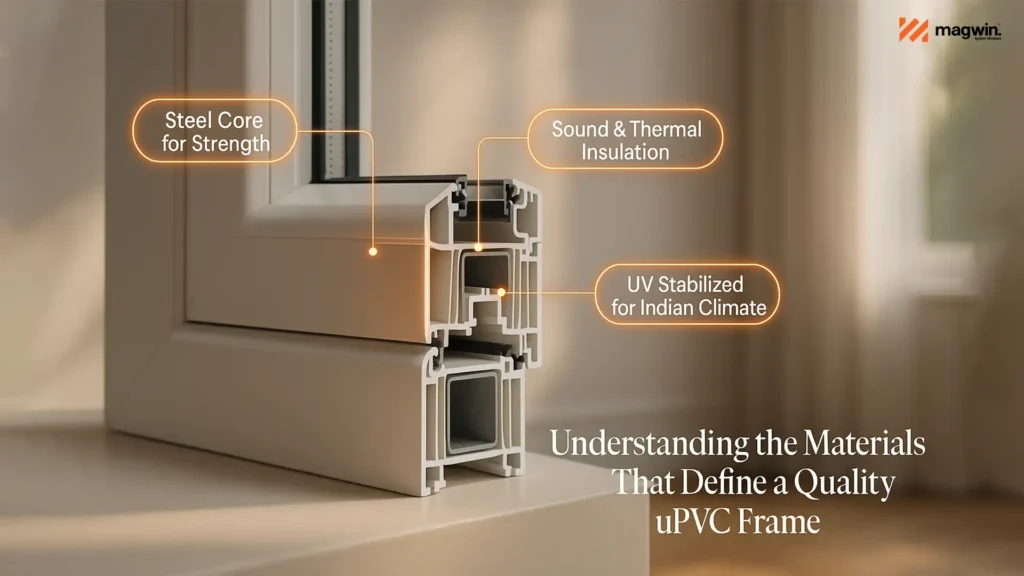
While uPVC is rigid, it lacks the load-bearing strength for larger windows or heavy glass units. That’s where galvanized steel reinforcement comes into play. It’s inserted inside the uPVC chamber during fabrication to enhance the frame’s structural integrity.
Key specifications to look for:
- Galvanized (rust-proof) coating
- Thickness of 1.2 mm to 2.0 mm
- Custom shapes (U, box, or L) based on design
- Proper anchoring with screws for hardware stability
Without this reinforcement, frames are more prone to flexing, sagging, or cracking—especially under high wind load or daily use.
Magwin uses engineered reinforcement plans based on span size, building height, and expected wind pressure—ensuring windows that remain aligned and strong even after years of operation.
3. Stabilizers: What Keeps the Frame Safe from UV & Heat
Stabilizers are chemical additives mixed into the uPVC resin during manufacturing to protect against degradation from UV rays, heat, and oxygen exposure.
Types of stabilizers:
- Calcium-Zinc: The industry-standard lead-free option, offering thermal stability and long-lasting finish.
- Tin-based stabilizers: Sometimes used in specialty applications; less common in residential fenestration.
- UV Absorbers: Organic compounds that absorb UV energy and dissipate it as low-grade heat, preventing damage.
Frames made with poor or minimal stabilizers may:
- Turn yellow over time
- Become brittle in cold weather
- Warp or expand under sunlight
- Fail sealing and structural alignment
That’s why Magwin only works with profiles that pass UV resistance and weather exposure tests, ensuring each frame is built for the demanding conditions of Uttarakhand’s hills and valleys.
4. Gaskets & Seals: The Unsung Heroes of Insulation
While frames form the structure, it’s the gaskets and seals that determine insulation, airtightness, and water resistance.
High-quality seals are:
- Made from EPDM (Ethylene Propylene Diene Monomer): An elastic, ozone-resistant material that remains flexible for years.
- Fitted seamlessly around the glazing bead and sash to prevent air gaps.
- Able to withstand cold and heat without cracking or hardening.
Inferior rubber or foam seals deteriorate rapidly in extreme temperatures—leading to air leaks, water seepage, and noise intrusion.
Magwin uses multi-point sealing systems in all its windows and doors. This ensures every unit is draft-proof and rain-tight—delivering a quieter, more comfortable interior environment in all seasons.
5. Glass Compatibility: Building for Thermal & Acoustic Performance
Although the frame doesn’t include the glass, its design and materials must support modern glazing options—especially in homes that prioritize insulation or noise control.
Magwin frames are compatible with:
- Single glass units (4–6mm)
- Double-glazed units (up to 24mm)
- Triple glazing (for advanced insulation)
- Laminated or toughened safety glass
- Low-E and reflective glass for thermal control
A quality frame must have rigid walls, strong glazing beads, and enough internal space to hold glass units securely—without flexing or shifting over time.
The frame’s thermal conductivity also matters—poorly formulated uPVC can transfer heat easily, weakening your insulation. At Magwin, our uPVC compositions are designed to reduce thermal bridging, keeping homes cooler in summer and warmer in winter.
6. Drainage Channels & Profile Design
One of the most overlooked aspects of a uPVC frame is its ability to manage water drainage. In high-rainfall zones like Uttarakhand, even the best seals need support from proper drainage.
Magwin uses sloped profile designs with integrated drainage paths to:
- Redirect water away from the frame
- Prevent pooling inside the track or sill
- Avoid long-term moisture accumulation
These built-in water management features are not found in generic or cheap profiles, making them a key indicator of high-quality fabrication.
7. Surface Finish &Color Coating
While functionality is paramount, the aesthetic life of a uPVC frame depends on its surface treatment and color quality.
At Magwin, we offer:
- Gloss-finish white frames that resist yellowing
- Woodgrain laminated profiles in shades like walnut, oak, or mahogany
- Color-stable coatings that are heat- and UV-resistant
- Profiles that can withstand cleaning, sun, and pollution without discoloration
The key material here is the laminate film or extrusion pigment—both of which must be tested for UV durability and adhesion quality.
Cheap laminates tend to peel, fade, or bubble after 2–3 years, especially in homes facing intense sun. That’s why Magwin only sources finishes that pass accelerated weathering tests, ensuring windows look newer for longer.
8. Hardware Integration Compatibility
A good frame isn’t just about holding glass—it must integrate locks, hinges, rollers, and handles in a way that doesn’t strain or weaken over time.
To achieve this, the uPVC material must:
- Support drilling and screwing without cracking
- Hold screws firmly for years
- Allow precise hardware alignment (to prevent jamming or misfit)
- Be compatible with multiple lock and hinge systems (especially for casement and sliding models)
Magwin’s frames are fabricated with hardware-specific reinforcements and routing paths, ensuring every door or window feels premium in hand and performs reliably in use.
What It All Adds Up To
Every component mentioned above plays a role in defining what makes a uPVC frame “high quality.”
When combined, they deliver:
- Durability: Resistance to bending, fading, and breaking
- Efficiency: Better temperature and sound insulation
- Safety: Stronger locks, break-resistant glass, and long-term structural strength
- Aesthetics: Finishes that stay glossy, laminated textures that don’t fade
- Value: Low maintenance, fewer repairs, and longer lifespan
At Magwin, we’ve built our reputation on mastering every one of these materials—and combining them into systems that perform. That’s why we’re widely recognized as the best uPVC window manufacturer in Uttarakhand.
Final Takeaway: Choose Materials Before You Choose a Brand
In the age of marketing claims and flashy packaging, it’s easy to get distracted by pricing gimmicks or visual samples. But behind every durable, high-performing window is a combination of engineered materials that silently do their job for years.
So before you pick a uPVC window provider, ask the questions that matter:
- Is the profile lead-free and UV-resistant?
- What kind of reinforcement is used?
- Are the gaskets made of EPDM or inferior rubber?
- Can the frame support double/triple glazing securely?
- How is drainage handled in monsoon-prone areas?
When the answers are detailed, confident, and backed by standards—you’ve found your manufacturer.
At Magwin, we’re proud to not just offer great-looking products—but windows and doors engineered from the inside out, for the real-life needs of homes in Uttarakhand.
📍 Visit Our Offices: Rudrapur | Haldwani | Nainital
📞 Contact: +91 7248-000121
🛠️ Book a Material Consultation & Site Audit Today